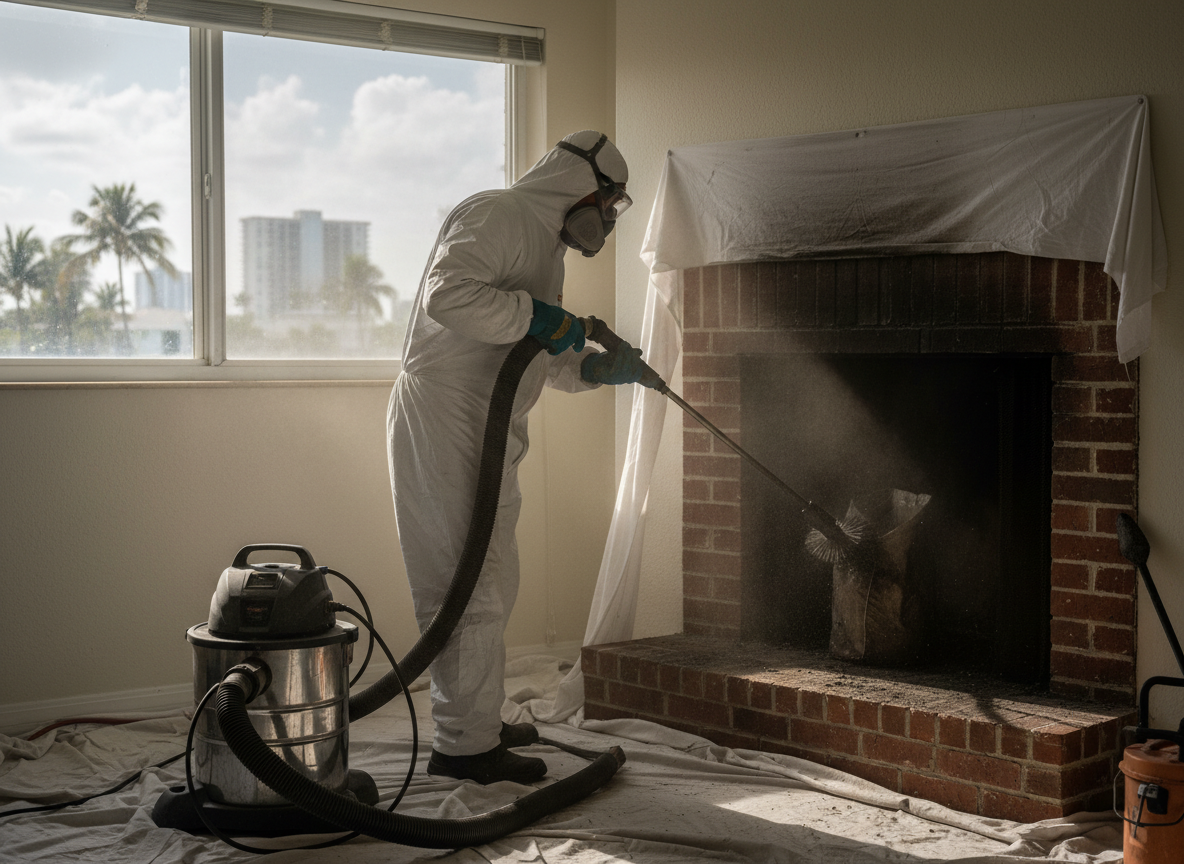
Soot from structure fires in Hallandale settles differently on the mix of mid-century concrete block homes in Golden Isles and newer builds along Hallandale Beach Boulevard District. The tropical monsoon climate keeps relative humidity high even after the rain stops, so dry soot quickly turns into a sticky film that bonds to drywall, tile, and HVAC registers. Technicians start with HEPA-filtered negative-air machines to prevent redistribution before any surface work begins.
In older properties near Diplomat Resort or Downtown Hallandale Beach, soot often penetrates unsealed plaster and textured ceilings that were common before modern fire codes. Standard wiping fails here because it drives particles deeper into the substrate. We use pH-neutral emulsifiers matched to the soot type, followed by controlled drying to avoid trapping moisture that could trigger mold growth during the wet season.
Nearby cities such as Hollywood and Aventura share the same coastal exposure, but Hallandale’s lower elevation means more properties sit close to the water table. This makes basement-level or ground-floor soot cleanup slower because any overspray from cleaning solutions can migrate into slab cracks. Final verification includes black-light inspection and air sampling to confirm particle counts have returned to pre-loss levels.
Restoration stops only after the HVAC system is cleaned and all registers are sealed, because Hallandale’s year-round air-conditioning cycles can otherwise recirculate remaining soot for weeks. Homeowners in Three Islands Park often overlook this step, leading to repeat complaints after they return.
Technician insight
In Hallandale, the thing that catches most people out with Soot removal is how the tropical monsoon humidity turns dry soot into a film that bonds to older plaster walls around Hallandale Beach Boulevard District; skipping the initial negative-air step just pushes it deeper into the texture.
Kitchen fire soot in Golden Isles condo
A kitchen fire left oily soot on cabinets and throughout the HVAC in a Golden Isles condo. We found particles had traveled into wall cavities because the unit’s older returns lacked proper filtration. Containment and emulsifying agents cleared surfaces and ducts; final sampling confirmed safe levels before the owner returned.
How it works
- 1
Initial Assessment
Technicians inspect every room, attic, and duct run to map soot migration patterns specific to Hallandale’s housing stock.
- 2
Containment Setup
Negative-air machines and plastic barriers isolate affected zones to stop particles from moving into unaffected areas during the wet summer months.
- 3
Surface Cleaning
HEPA vacuuming followed by emulsifying agents matched to the soot chemistry removes residue from walls, ceilings, and contents without damaging finishes.
- 4
HVAC and Final Clearance
Duct cleaning and air sampling confirm the property meets pre-loss conditions before homeowners reoccupy.
Pricing
Pricing varies by square footage affected, soot penetration depth, and whether HVAC cleaning is required.