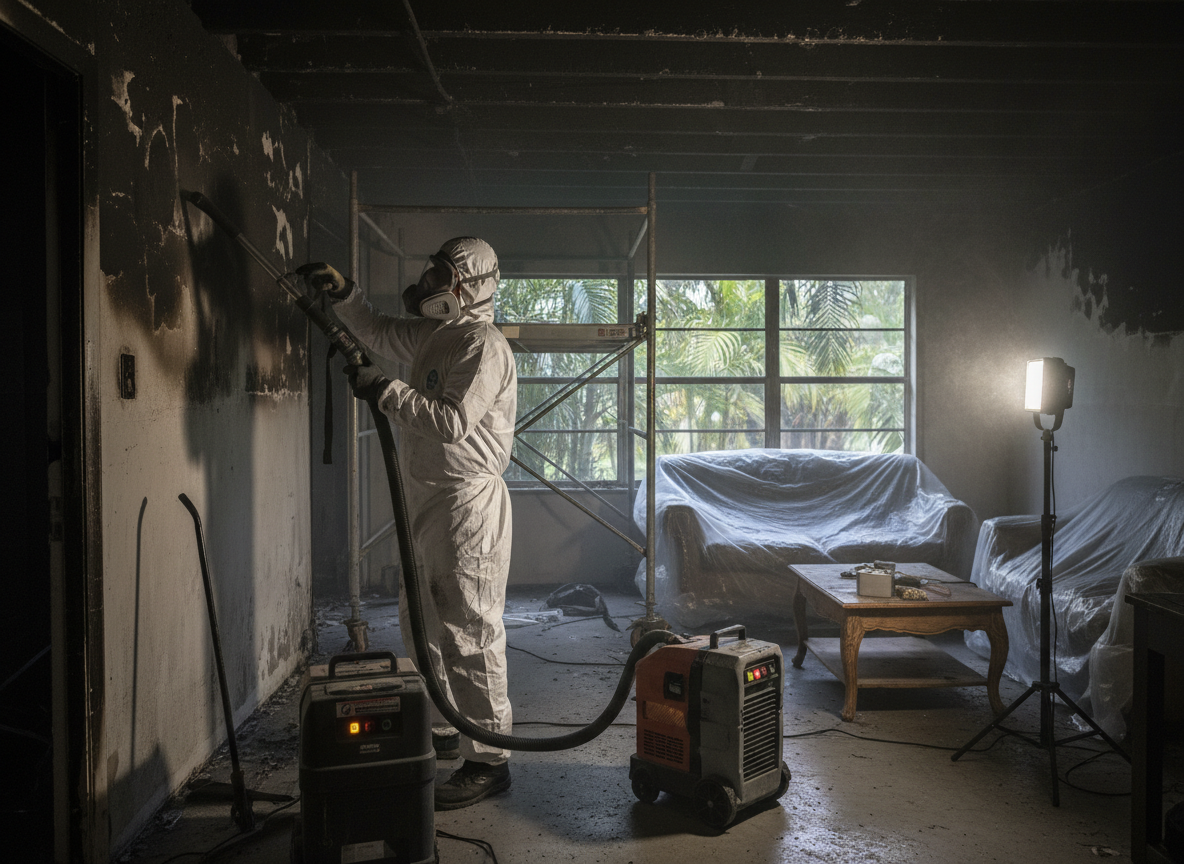
In Hallandale Beach homes built before the 1980s along Hallandale Beach Boulevard District and in Golden Isles, smoke travels through plaster walls and older HVAC runs, leaving acidic residue that corrodes metal fixtures and discolors fabrics. Tropical monsoon humidity during wet summers keeps soot particles moist, allowing them to bond deeper into porous surfaces such as drywall and carpet padding common in Three Islands Park condominiums. Technicians must test pH levels on-site and apply alkaline neutralizers before sealing, or odors return once summer moisture rises again. Work near Gulfstream Park Racing and Casino or the Diplomat Resort often involves coordinating with property management to isolate smoke from shared corridors without disrupting neighboring units.
Smoke remediation in Broward County requires separating visible soot from invisible odor molecules that embed in insulation and behind baseboards. Properties in Downtown Hallandale Beach frequently have terrazzo or tile floors that trap residue in grout lines, while nearby Aventura and Sunny Isles Beach high-rises add elevator shaft migration paths that spread smoke upward. Crews use air scrubbers with activated carbon and hydroxyl generators sized for the square footage, running them continuously for several days while monitoring humidity to prevent secondary mold growth during the wet season. Skipping this step in older single-family homes near Hallandale Beach often leads to callbacks when residents notice musty smells after the first heavy rain.
Edge cases include protein-based smoke from kitchen fires that leaves a sticky film on surfaces in Hallandale Beach Boulevard District restaurants and vacation rentals. These residues require different solvents than wood or synthetic smoke and must be removed before any ozone treatment to avoid setting the odor permanently. Local code in Broward County requires proper disposal of contaminated materials at approved facilities; crews document every load to protect homeowners during insurance claims. After treatment, a final walkthrough with moisture meters and odor detection confirms clearance before reoccupancy.
Technician insight
In Hallandale the thing that catches most people out with smoke remediation is how the wet-summer humidity keeps soot damp and lets it sink into older plaster and carpet padding in Golden Isles and Three Islands homes. Homeowners often wipe visible black marks and think the job is done, but the acid residue stays active and will stain again once the next rain raises indoor moisture.
Golden Isles condo after kitchen fire
Smoke from a stove fire migrated through the HVAC into bedrooms and the hallway. Inspection showed acidic soot on plaster walls and inside the return ducts. Crews contained the unit, neutralized surfaces, cleaned the ductwork, and ran hydroxyl treatment for three days. Odor cleared and the family returned without secondary damage during the humid season.
How it works
- 1
Initial Assessment
Inspect all affected rooms, test surfaces for pH and soot depth, and map migration paths through HVAC and shared walls.
- 2
Containment and Ventilation
Set up negative air machines and seal doorways to prevent cross-contamination into unaffected areas of the property.
- 3
Residue Removal
Apply pH-specific cleaners to walls, ceilings, and floors, followed by HEPA vacuuming and ultrasonic cleaning of small items.
- 4
Odor Neutralization
Run hydroxyl generators and thermal fogging as needed, then monitor with air quality meters until readings normalize.
- 5
Final Clearance
Conduct walkthrough with homeowner, retest surfaces, and provide written documentation for insurance.
Pricing
Cost depends on square footage affected, smoke type, and number of rooms requiring odor treatment; upfront quotes provided after inspection.