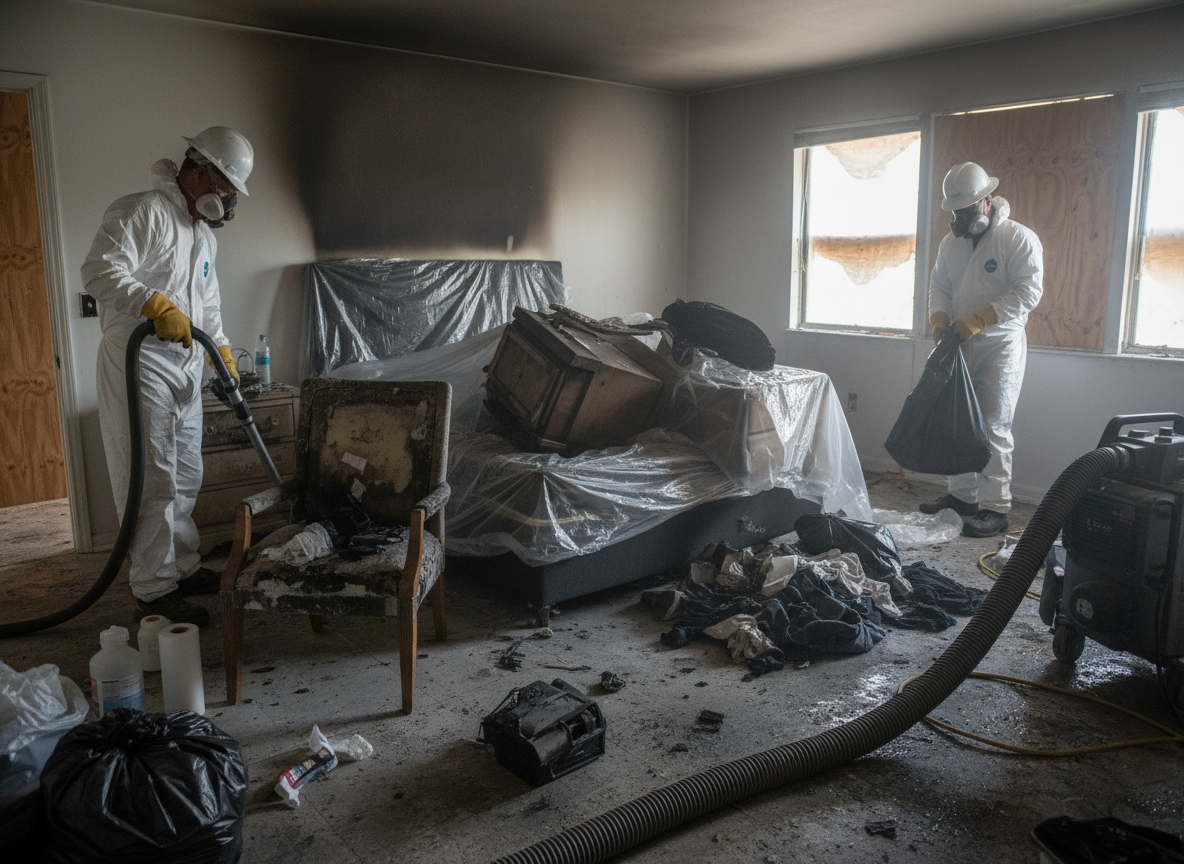
Sunny Isles Beach sits just north of Hallandale Beach along A1A with a dense line of oceanfront high-rises and mid-rise condos built mostly after 2000. Fire damage restoration here often means working above the tenth floor where elevators may be out and stairwells are narrow. Our crew leaves the Hallandale shop at 501 N Dixie Hwy and reaches Collins Avenue addresses in under twenty minutes even during peak tourist traffic.
Wet summers bring frequent afternoon storms that raise indoor humidity after firefighters use water. That extra moisture lingers in gypsum board and insulation inside units that already sit in salt air. We stage dehumidifiers on balconies and use corrosion inhibitors on exposed metal because the ocean breeze speeds rust on HVAC ducts and electrical boxes once a fire is out.
Access is tight along the beach blocks. Limited curb space and one-way streets force us to unload equipment at the service entrance and carry it through lobbies. Residents in buildings near Sunny Isles Beach Park and the Beachwalk expect minimal disruption, so we schedule noisy demolition for daytime hours only.
Around Sunny Isles Beach
We regularly work near:
- 📍Sunny Isles Beach Park
- 📍Collins Avenue
- 📍Newport Beachside Resort
- 📍Acqualina Resort
- 📍The Beachwalk
- 📍172nd Street
Fire Damage Restoration Hallandale in Sunny Isles Beach — Local Notes
- •High-rise condo construction along Collins Avenue requires lift equipment and stairwell protection when moving debris from upper floors.
- •Salt-laden air accelerates corrosion on fire-damaged metal HVAC components and wiring, so we treat surfaces before reinstallation.
- •Summer humidity spikes after suppression water is used, extending drying times in units with sealed impact windows.
- •Narrow beachfront service roads limit truck parking, so we stage at nearby 172nd Street lots and shuttle gear on carts.