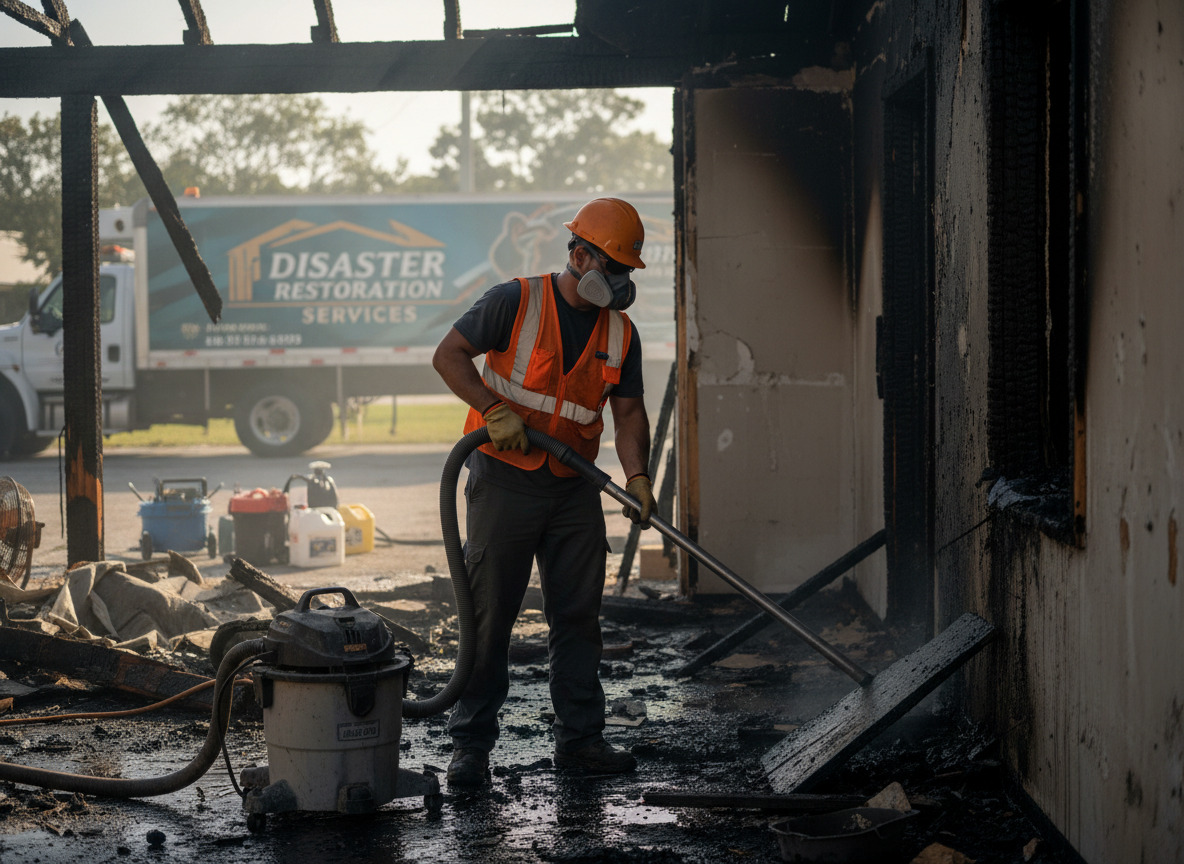
Hallandale's older housing stock along Hallandale Beach Boulevard and in Golden Isles often features wood framing and plaster walls that trap soot deeply after a fire. In a tropical monsoon climate with wet summers, residual moisture quickly turns acidic smoke residue into corrosion on metal wiring and HVAC components. Technicians arriving from 501 N Dixie Hwy must first stabilize humidity levels inside the structure before any cleaning begins, or hidden damage spreads to nearby homes in Three Islands.
Fires in single-family homes near Gulfstream Park Racing and Casino frequently involve kitchen or electrical origins that migrate through shared attics common in the area. Broward County building codes require permits for any structural repairs once fire damage exceeds surface levels, so crews document every layer removed. High groundwater tables around Diplomat Resort and Sunny Isles Beach mean basements are rare, yet crawl spaces still collect water that mixes with ash and creates secondary mold risks during summer rains.
Response teams prioritize boarding up openings created by firefighters to prevent rain from entering while work continues. Materials such as popcorn ceilings popular in 1970s Hallandale construction release fine particles that settle into carpet padding and ductwork, requiring HEPA filtration rather than standard vacuuming. Coordination with Hollywood and Aventura fire departments ensures utilities are safely isolated before crews enter.
Technician insight
In Hallandale, the thing that catches most people out with Emergency fire damage restoration is how quickly our tropical monsoon humidity turns soot acidic inside older plaster walls around Three Islands and Golden Isles. Homeowners often try basic wiping first, but that drives residue deeper into the wood framing common in Hallandale Beach Boulevard District homes and creates corrosion on wiring before we even arrive.
Kitchen Fire in Downtown Hallandale Beach Home
A cooking fire spread through an attic in a 1970s home near Hallandale Beach Boulevard. Crews found soot had traveled into shared wall cavities and HVAC ducts. After humidity stabilization and HEPA cleaning, the structure was dried and restored without mold issues despite ongoing summer rains.
How it works
- 1
Immediate Site Assessment
Technicians arrive within hours, evaluate structural safety, and document all affected areas in Hallandale properties using moisture meters and thermal imaging.
- 2
Securing and Containment
Board-up of openings, tarping of roofs, and erection of containment barriers prevent further weather or smoke migration into unaffected rooms.
- 3
Soot and Smoke Removal
Specialized equipment extracts acidic residues from surfaces, HVAC systems, and contents while humidity is controlled to avoid corrosion in the wet summer climate.
- 4
Structural Drying and Cleaning
Dehumidification and air scrubbing continue until readings meet industry standards, followed by cleaning of salvageable materials.
- 5
Restoration and Final Walkthrough
Repairs and reconstruction restore the property, with a final inspection confirming all fire-related damage has been addressed.
Pricing
Upfront quotes provided after inspection; cost varies with extent of structural involvement and materials affected.