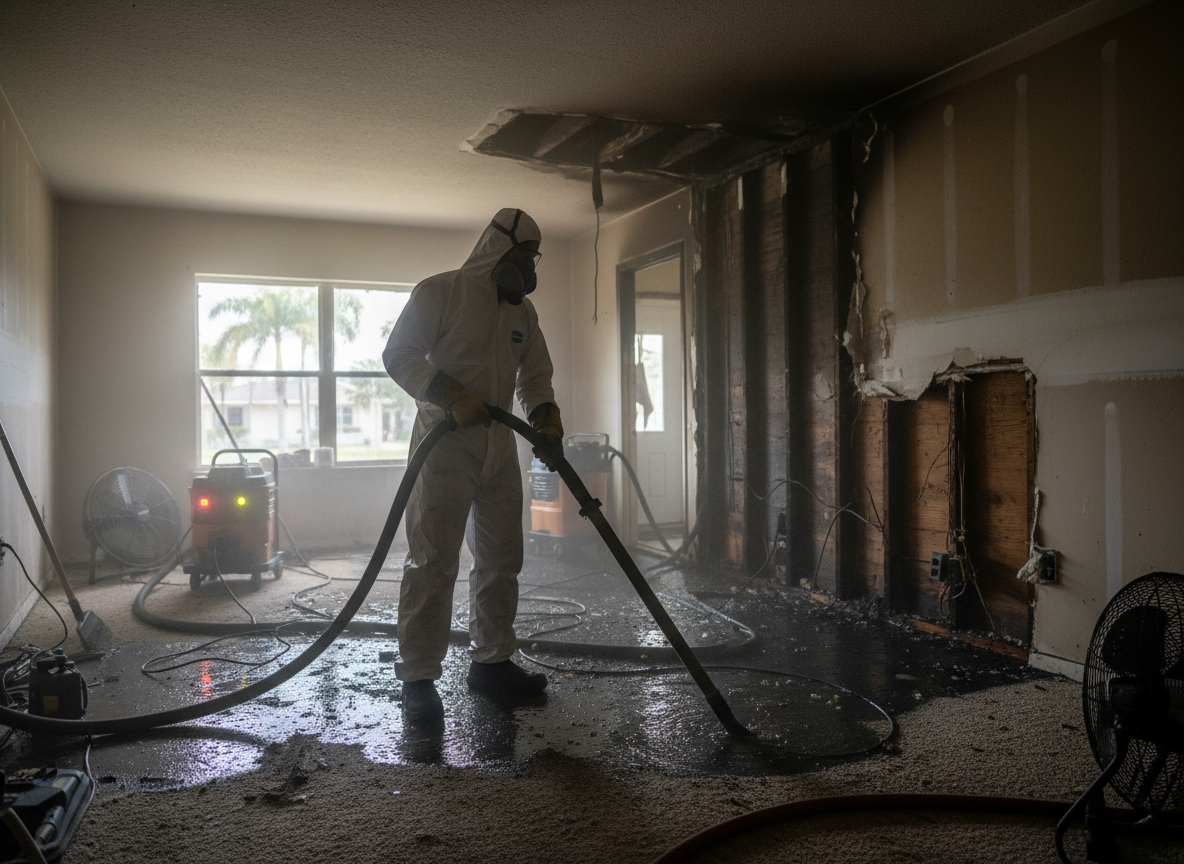
Fire and flood restoration in Hallandale often starts with water used by departments in older frame and stucco homes common along Hallandale Beach Boulevard District and in Golden Isles. High humidity from the tropical monsoon climate keeps moisture trapped in lath, plaster and insulation long after visible water is gone, raising mold risk inside wall cavities that face the Intracoastal or sit near Three Islands Park. Technicians must pull baseboards, use moisture meters on every level, and run commercial dehumidifiers sized for the square footage rather than relying on box fans that cannot overcome summer dew points.
Smoke and soot travel differently in these low-rise buildings than in high-rises near the Diplomat Resort. Residues from burning plastics and wiring settle into HVAC returns and behind kitchen cabinets in homes built before updated Broward County ventilation codes. Restoration crews seal off rooms with negative air machines, HEPA vacuum surfaces, and wash or discard porous materials before ozone or thermal fogging to avoid driving odors deeper into carpet pads or drywall.
Flooding after a kitchen or laundry fire compounds the job when water migrates to lower levels in split-level homes typical of Aventura and Sunny Isles Beach borders. Crews install temporary dikes, extract standing water within hours, and document every step for insurance adjusters who expect photos from both fire origin and water path.
Seasonal Humidity Challenges
Wet summers increase drying times by days compared with drier months, requiring daily moisture logs and sometimes tenting exterior walls to control airflow around Gulfstream Park properties where salt air adds corrosion risk to metal HVAC components.
Technician insight
In Hallandale, the thing that catches most people out with Fire and flood restoration is how our wet-summer humidity keeps moisture inside older plaster walls around Hallandale Beach Boulevard District long after the fire department leaves, so hidden mold shows up weeks later if crews skip daily meter checks.
Kitchen Fire Water Damage in Golden Isles
A cooking fire in a Golden Isles single-story home triggered sprinklers and firefighters. Water traveled under cabinets into the slab edge and HVAC closet. Crews extracted water the same night, dried the slab for six days with targeted equipment, removed and replaced saturated base cabinets, and cleared the home before mold could form in the high-humidity conditions.
How it works
- 1
Initial Assessment
Technician arrives within hours, documents fire origin, smoke paths and all water migration using moisture meters and thermal imaging.
- 2
Containment and Safety
Set up barriers, negative air and PPE zones to prevent cross-contamination between affected rooms and unaffected living spaces.
- 3
Water Extraction and Drying
Remove standing water, place industrial dehumidifiers and air movers, then monitor daily until readings return to normal for Hallandale humidity levels.
- 4
Smoke and Soot Removal
Clean surfaces, HVAC systems and contents with appropriate agents, followed by odor neutralization suited to the materials present.
- 5
Restoration and Repairs
Replace damaged drywall, flooring and trim, then coordinate with licensed trades for electrical or plumbing work required after the fire.
Pricing
Upfront quotes provided after on-site assessment; final cost depends on square footage affected, number of levels, and extent of hidden moisture.