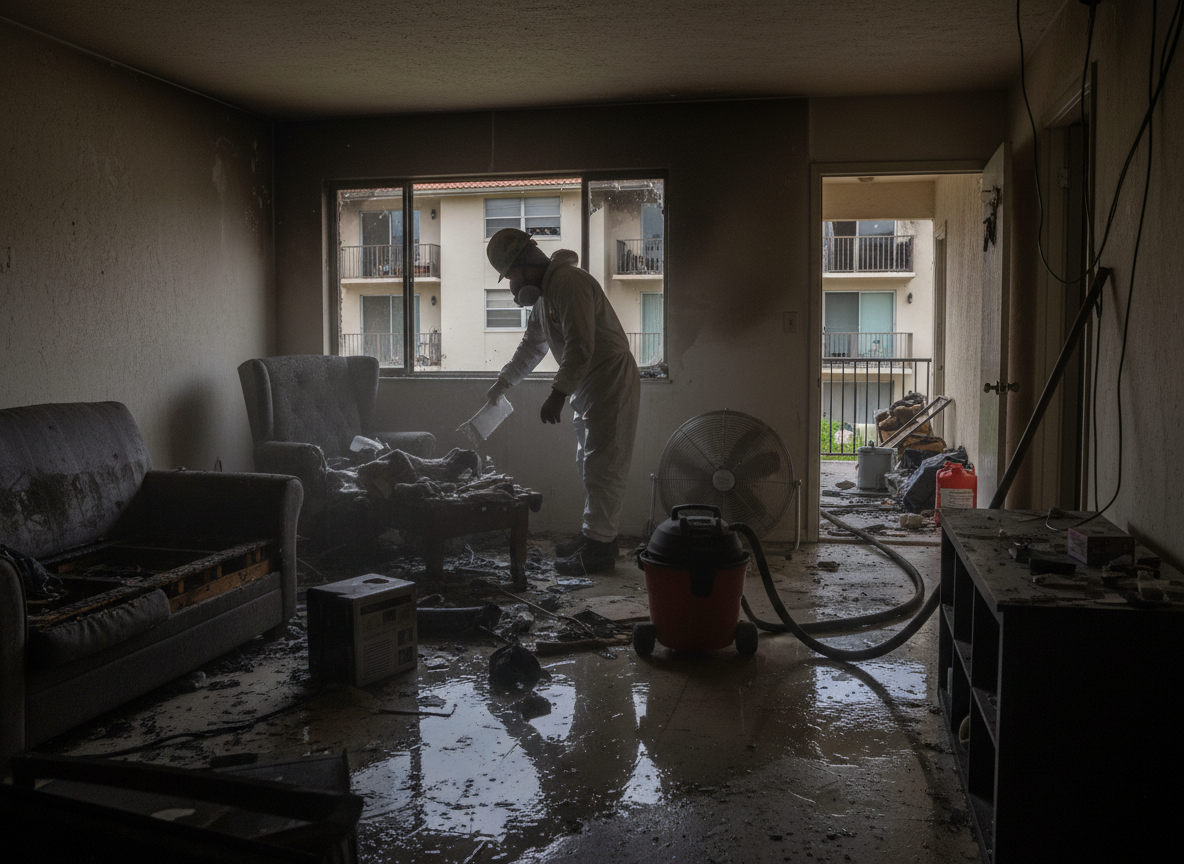
Apartment fires in Hallandale often involve older multi-unit buildings in neighborhoods like Golden Isles and the Hallandale Beach Boulevard District where shared walls and HVAC runs allow smoke to travel between units. Soot from these fires bonds quickly to drywall, carpet and cabinetry in the humid conditions common after summer storms, requiring specialized pH-neutral cleaners and air scrubbers to avoid permanent staining. Technicians must also address water introduced by firefighters that can linger in slab-on-grade construction typical of the area.
In Broward County apartments near Diplomat Resort or Aventura borders, code requirements for fire-rated separations mean any cleanup that disturbs walls or ceilings triggers inspection steps before re-occupancy. Edge cases include hidden soot inside electrical boxes and within dropped ceilings common in buildings along Three Islands Park, where incomplete removal leads to recurring odors. Work is sequenced to keep adjacent occupied units isolated while extraction and deodorization occur.
Tropical monsoon patterns increase secondary risks because high humidity slows drying of porous materials after water is used on the fire. Crews use moisture meters on concrete and wood framing to locate pockets that could support mold if left untreated. Coordination with property managers is essential in complexes where one unit fire affects multiple residents through common corridors.
Technician insight
In Hallandale, the thing that catches most people out with Apartment fire cleanup is how smoke travels through the older shared ductwork in buildings around Golden Isles, especially when summer rains have already raised indoor humidity levels before the fire even starts.
Golden Isles Apartment Unit Fire
Smoke from a kitchen fire on the second floor migrated through the building's return air ducts into three neighboring units. Inspection showed heavy soot on HVAC coils and inside wall cavities. Crews isolated the system, performed source removal, and ran drying equipment for 72 hours before clearance testing allowed residents to return.
How it works
- 1
Initial Assessment
Technicians inspect the affected apartment and adjacent units for smoke migration paths through vents and shared walls.
- 2
Containment Setup
Plastic barriers and negative air machines isolate the fire unit to prevent soot spread into hallways or neighboring apartments.
- 3
Soot and Debris Removal
HEPA vacuuming and chemical sponges clean surfaces while contents are inventoried and moved for off-site cleaning when needed.
- 4
Odor Neutralization and Drying
Ozone or hydroxyl generators combined with dehumidifiers address lingering smoke smells after moisture is removed from the structure.
Pricing
Upfront quotes provided after inspection; cost driven by number of affected units and extent of smoke migration through shared systems.